
va-court-case-info-circuit-court is the central hub for accessing official case records, docket updates, and court schedules across Virginia’s 31 judicial circuits. This system serves as the primary trial court for civil disputes exceeding $25,000, felony criminal cases, and major misdemeanors. It also shares jurisdiction with General District Courts for claims between $4,500 and $25,000, including personal injury and wrongful death cases up to $50,000. As of 2024, each circuit operates independently but feeds data into statewide platforms like the Circuit Court Case Management System (CCMS) and the Online Case Information System (OCIS 2.0), ensuring real-time public access to over 950,000 active case files. These systems are maintained by the Office of the Executive Secretary of the Supreme Court of Virginia and updated within two hours of filing.
How to Search for va-court-case-info-circuit-court Records
To find case details in any Virginia circuit court, users must first identify the correct jurisdiction. Unlike unified databases, Virginia’s system requires searches to be conducted per circuit—there is no statewide search function. Start by visiting the official Virginia Courts website or the specific county portal (e.g., Prince William, Stafford, Norfolk). Select the appropriate circuit, then choose between civil or criminal divisions. Searches can be performed using a party’s full name, exact docket number, or scheduled hearing date. Results display filing dates, charge descriptions, motion histories, and upcoming calendar events. For accuracy, always verify spelling and use middle initials when available. The system does not support partial name matches or wildcard characters.
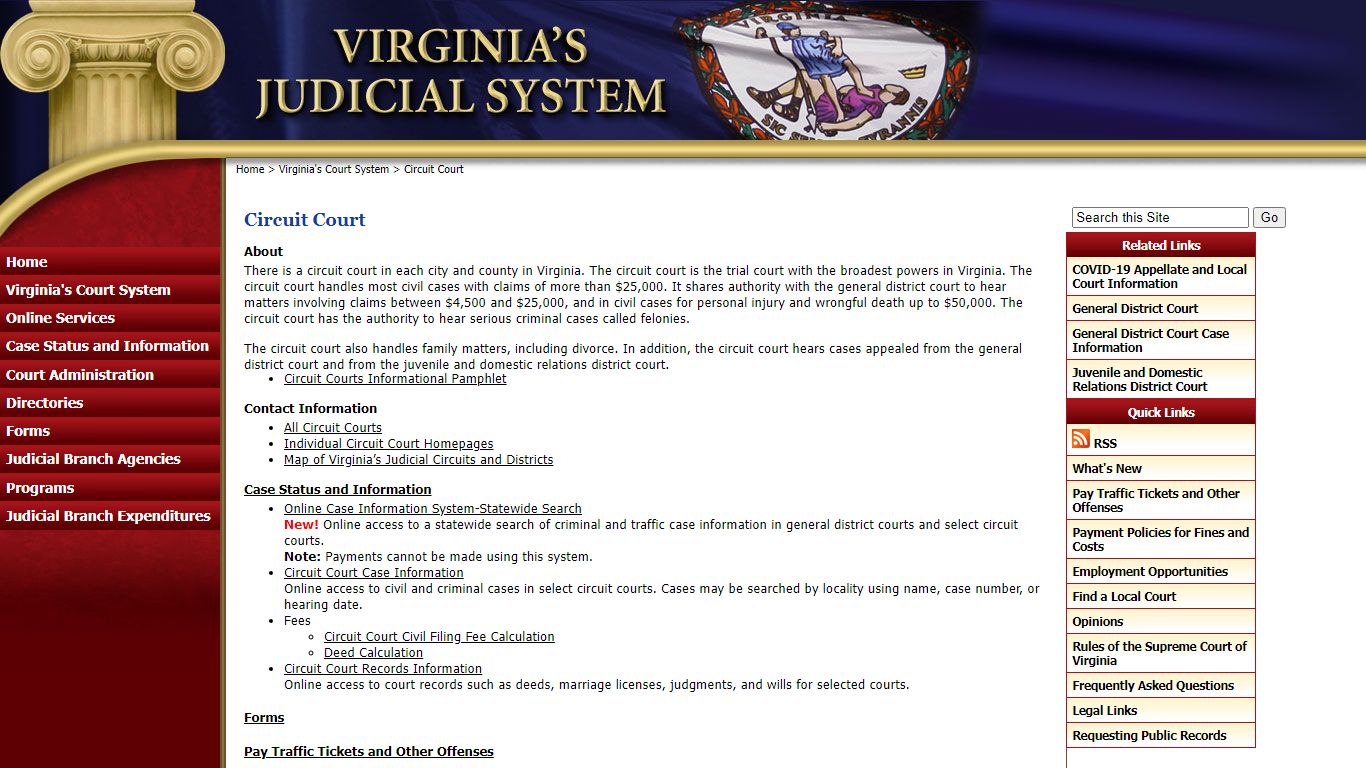
Understanding the Circuit Court Case Management System (CCMS)
The Circuit Court Case Management System (CCMS) is the backbone of digital recordkeeping for participating Virginia circuits. As of December 2023, 24 out of 31 circuits contribute data to CCMS, which logs more than 950,000 active cases. Each entry includes timestamps, clerk signatures, and document types, creating a reliable audit trail. Clerks serve as legal custodians of these records under state law, ensuring all filings—from complaints to final judgments—are accurately captured. Updates occur within two hours of physical filing, making CCMS one of the fastest state-level court databases in the U.S. However, users must note that non-participating circuits require direct contact with local clerks for case information.
Real-Time Access via OCIS 2.0
The Online Case Information System (OCIS 2.0) delivers live docket data for both circuit and General District Courts. Managed by the Executive Secretary’s office, OCIS 2.0 handled over 1.4 million queries in 2023 with 99.7% uptime. It integrates data from local case management platforms and displays real-time updates on hearings, motions, and dispositions. Users can filter results by court, case type, or date range. The system also provides fee schedules, payment options, and downloadable forms. OCIS 2.0 is accessible via secure web portals and supports mobile devices, enabling attorneys, litigants, and researchers to monitor cases remotely without visiting courthouses.
County-Specific Portals and Their Features
Many Virginia counties operate dedicated case information portals with unique tools. For example, Prince William County allows users to search by name, docket number, or hearing date and view full case records including charge details and court orders. Stafford County lists presiding judges, grand jury schedules (first Monday of each month, unless holiday), and annual filing statistics—4,210 civil and 1,875 criminal cases in FY 2023. Norfolk’s portal offers daily docket requests, document retrieval, and online fee payments totaling $1.3 million in 2023. These localized systems reduce in-person visits by up to 40%, according to statewide reports.
Civil vs. Criminal Case Handling in Circuit Courts
Virginia Circuit Courts handle two main case types: civil and criminal. Civil cases involve disputes over money, property, or contracts where the claimed amount exceeds $25,000. They also cover divorce, custody, and injunctions. Criminal cases include felonies (e.g., robbery, assault) and serious misdemeanors. For claims between $4,500 and $25,000, jurisdiction is shared with General District Courts. Personal injury and wrongful death suits may reach $50,000 in circuit court. Each case type follows distinct procedures—civil cases often involve discovery and mediation, while criminal cases require arraignments, pretrial motions, and jury trials. All proceedings are recorded and accessible through official portals.
Judicial Structure Across 31 Circuits
Virginia’s 31 judicial circuits vary in size and caseload. Larger circuits like Fairfax and Loudoun assign up to nine judges to manage high volumes, while rural circuits may have only one. Each circuit covers one or more counties and is led by elected circuit court judges serving eight-year terms. Judges preside over trials, rule on motions, and issue final judgments. The Office of the Executive Secretary coordinates technology, training, and policy across all circuits to ensure consistency. Despite decentralization, all circuits adhere to the same state laws and procedural rules, maintaining fairness and transparency.
Public Access and Transparency Measures
Virginia prioritizes open government through digital access. The General District Court Online Case Information System processed over 1.2 million payment transactions in 2023, cutting foot traffic by 40%. Similarly, OCIS 2.0 logged 2.2 million unique searches last year. All systems include disclaimers about data accuracy and scheduled maintenance windows. Users receive instant confirmation of payments and downloadable receipts. Courts also publish holiday calendars, judge directories, and procedural guides online. These measures build public trust and reduce administrative burdens on court staff.
Limitations and Common User Challenges
Despite robust systems, users face limitations. Not all 31 circuits participate in CCMS, requiring offline inquiries for some records. Name searches may return multiple results, demanding careful review. Docket numbers must be exact—no partial matches allowed. Some counties lack mobile-friendly designs or multilingual support. Additionally, sealed or expunged records are not visible, which can confuse users seeking complete histories. To overcome these, always double-check spelling, use official county links, and contact clerks directly for missing data.
Technology Infrastructure and Security
Virginia’s court systems rely on secure, state-managed servers with encryption and regular backups. OCIS 2.0 and CCMS use role-based access controls to protect sensitive data. Only authorized clerks can enter or modify records, and all changes are logged with timestamps. The Executive Secretary’s office conducts quarterly audits and complies with federal cybersecurity standards. In 2023, the system achieved 99.7% uptime, minimizing downtime during peak usage. Users benefit from SSL-secured connections and automatic session timeouts for privacy.
How Attorneys and Researchers Use the System
Legal professionals depend on va-court-case-info-circuit-court portals for case tracking, deadline management, and evidence review. Attorneys use docket numbers to monitor opposing counsel’s filings and prepare responses. Researchers analyze trends in civil litigation or criminal sentencing across circuits. Journalists access public records for investigative reporting. The system’s real-time updates allow timely interventions, such as filing motions before hearings. Many firms integrate OCIS 2.0 data into their internal case management software for seamless workflow.
Future Developments and Digital Expansion
Virginia plans to onboard remaining circuits into CCMS by late 2025, aiming for full statewide coverage. New features include AI-assisted search suggestions, automated deadline alerts, and e-filing integration for pro se litigants. The judiciary is also testing voice-enabled queries for accessibility. These upgrades align with the state’s goal of becoming a national leader in court digitization. Funding comes from federal grants and court technology fees, ensuring sustainable development without raising taxes.
Contact Information and Support Resources
For help with va-court-case-info-circuit-court searches, contact the Office of the Executive Secretary at (804) 786-6455. Visiting hours are Monday–Friday, 8:30 AM–4:30 PM, at 100 North Ninth Street, Richmond, VA 23219. Local circuit clerks provide in-person assistance during business hours. Online support includes FAQs, video tutorials, and live chat during weekday mornings. Emergency requests for urgent filings can be submitted via email with same-day response guarantees.
Related Public Records Services
Users often seek additional legal or background data alongside court records. Virginia offers vital statistics through the Department of Health, including birth, death, and marriage certificates. Law enforcement agencies provide warrant and inmate lookup tools for specific jurisdictions. These resources complement va-court-case-info-circuit-court by offering broader context for legal research, genealogy, or employment screening. Always verify the authenticity of third-party sites before use.
- Death Records Chattanooga TN
- Birth Records New York
- Active Warrant Search Arizona
- Whose Address Is This
- Inmate Lookup Va Beach
Frequently Asked Questions
Many users have questions about accessing, interpreting, or using va-court-case-info-circuit-court data. Below are detailed answers to the most common inquiries, based on official Virginia judiciary policies and 2023–2024 operational data.
How do I find a specific case if I only know the defendant’s name?
If you only have a defendant’s name, start by identifying the county where the case was filed. Visit the official Virginia Courts website or the specific county’s circuit court portal. Select the criminal or civil division, then choose “Search by Name.” Enter the full legal name, including middle initial if known. The system will return all matching cases. Click the correct docket number to view details like charges, hearing dates, and dispositions. Note that common names may yield multiple results, so cross-check with other details like filing year or co-defendants. If no results appear, the case might be in a non-participating circuit or under seal. In such cases, call the local clerk’s office with the name and approximate filing date for assistance.
Can I access sealed or expunged records through the online system?
No, sealed or expunged records are not available through any public online portal, including va-court-case-info-circuit-court systems. These records are restricted by Virginia Code § 19.2-392.02 and only accessible to authorized parties like law enforcement, prosecutors, or individuals with a court order. If you believe a record should be unsealed, you must file a motion with the presiding judge. The online system clearly marks restricted cases as “Not Available” or “Sealed.” Attempting to circumvent this violates state law. For background checks or employment verification, use certified disposition letters from the clerk instead.
Why can’t I search all Virginia circuits at once?
Virginia’s court system is decentralized, with each of the 31 circuits maintaining its own database. The Circuit Court Case Management System (CCMS) only includes 24 participating circuits as of 2024. There is no centralized index due to legacy technology, budget constraints, and data sovereignty policies. Users must search one circuit at a time. The Office of the Executive Secretary is working toward full integration by 2025, but until then, multi-circuit searches require visiting individual county portals or contacting clerks directly. This structure ensures data accuracy but increases search time for statewide research.
How accurate and up-to-date is the case information?
Case data in va-court-case-info-circuit-court systems is highly accurate and updated within two hours of filing. Clerks enter information directly into secure databases, and all entries include timestamps and user IDs for audit purposes. The Office of the Executive Secretary performs daily validation checks and reports 99.7% system uptime. However, human error can occur—such as typos in names or dates. If you spot an inconsistency, contact the circuit clerk immediately with documentation. Corrections are typically made within 24 hours. For critical matters like bail hearings or injunctions, always confirm details by phone before acting.
Are there fees for accessing or downloading court records?
Viewing case information online is free through official Virginia portals. However, downloading certified copies, obtaining physical documents, or requesting expedited services incurs fees. Typical costs include $10 for a certified docket sheet, $25 for a full case file copy, and $5 per page for oversized exhibits. Online payments are accepted via credit card or e-check through integrated gateways. Fee waivers are available for indigent parties with court approval. Always check the specific circuit’s fee schedule before submitting requests, as rates vary slightly by locality.
What should I do if the website is down or slow?
If the va-court-case-info-circuit-court portal is unresponsive, first check your internet connection and try refreshing the page. Scheduled maintenance occurs every second Sunday of the month from 2:00 AM to 6:00 AM EST. During outages, use the backup site at ewsocis1.courts.state.va.us or contact the IT help desk at (804) 786-6455. For urgent needs, visit the local clerk’s office in person with valid ID. The system averages 99.7% uptime, so prolonged downtime is rare. Bookmark official links to avoid phishing sites that mimic court portals.
Can I use this information for legal research or academic studies?
Yes, va-court-case-info-circuit-court data is publicly available for legal research, academic studies, journalism, and policy analysis. Researchers often track trends in civil litigation, criminal sentencing, or procedural delays across circuits. Always cite the official source (e.g., “Virginia Courts Case Information System, 2024”) and respect privacy laws. Do not publish identifiable details of minors or victims without redaction. The judiciary encourages scholarly use and provides bulk data requests for accredited institutions. Contact the Office of the Executive Secretary for formal data-sharing agreements.